





LLM-Based Solution for Gathering Feedback Insights
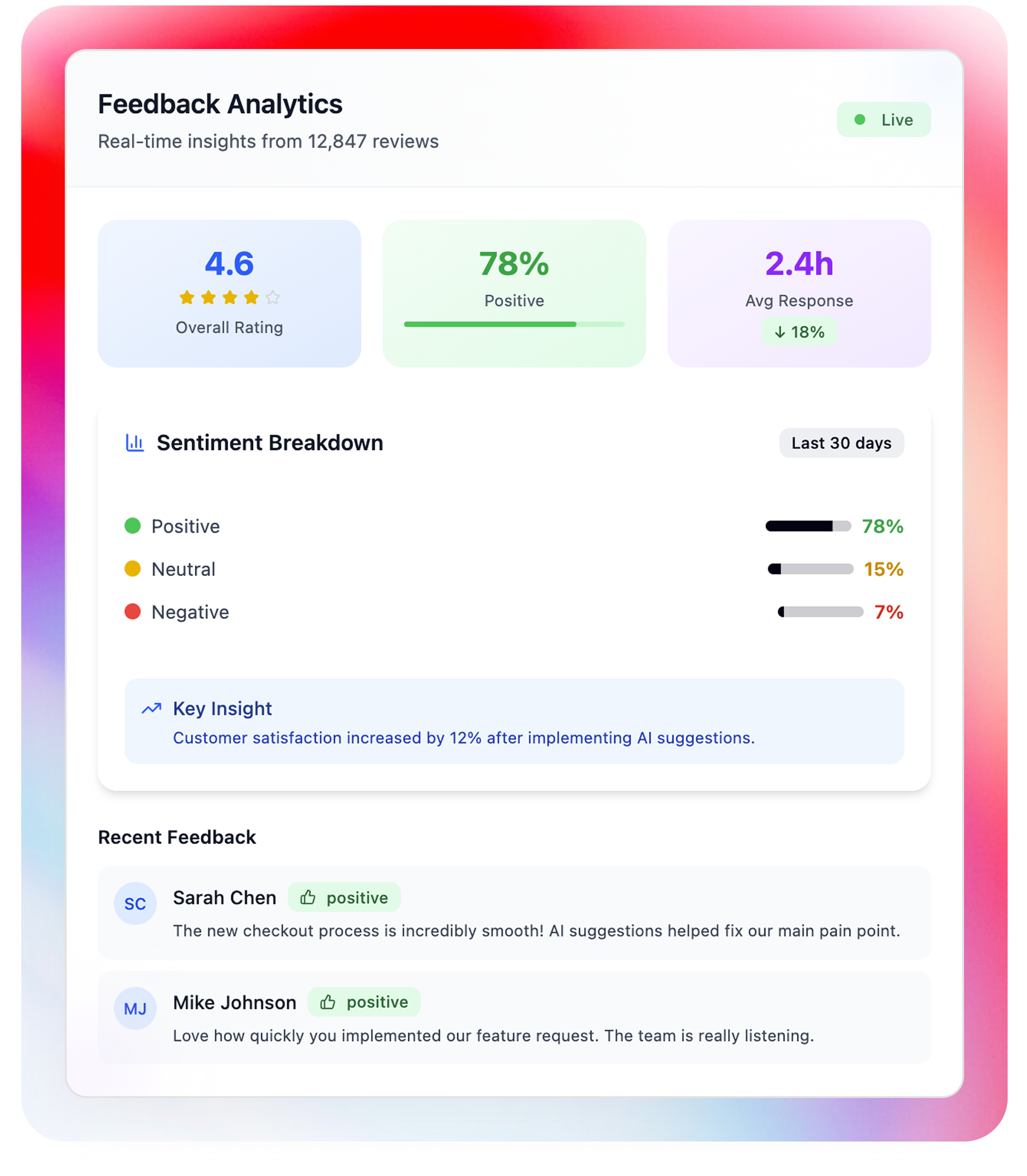
An LLM-powered insights engine that aggregates feedback from multiple channels, clusters feature requests, tracks sentiment trends, and automatically surfaces the most important customer signals.
LLM-powered analytics pipeline
SaaS
8 weeks
42% faster identification of actionable feedback
42% faster identification of actionable feedback
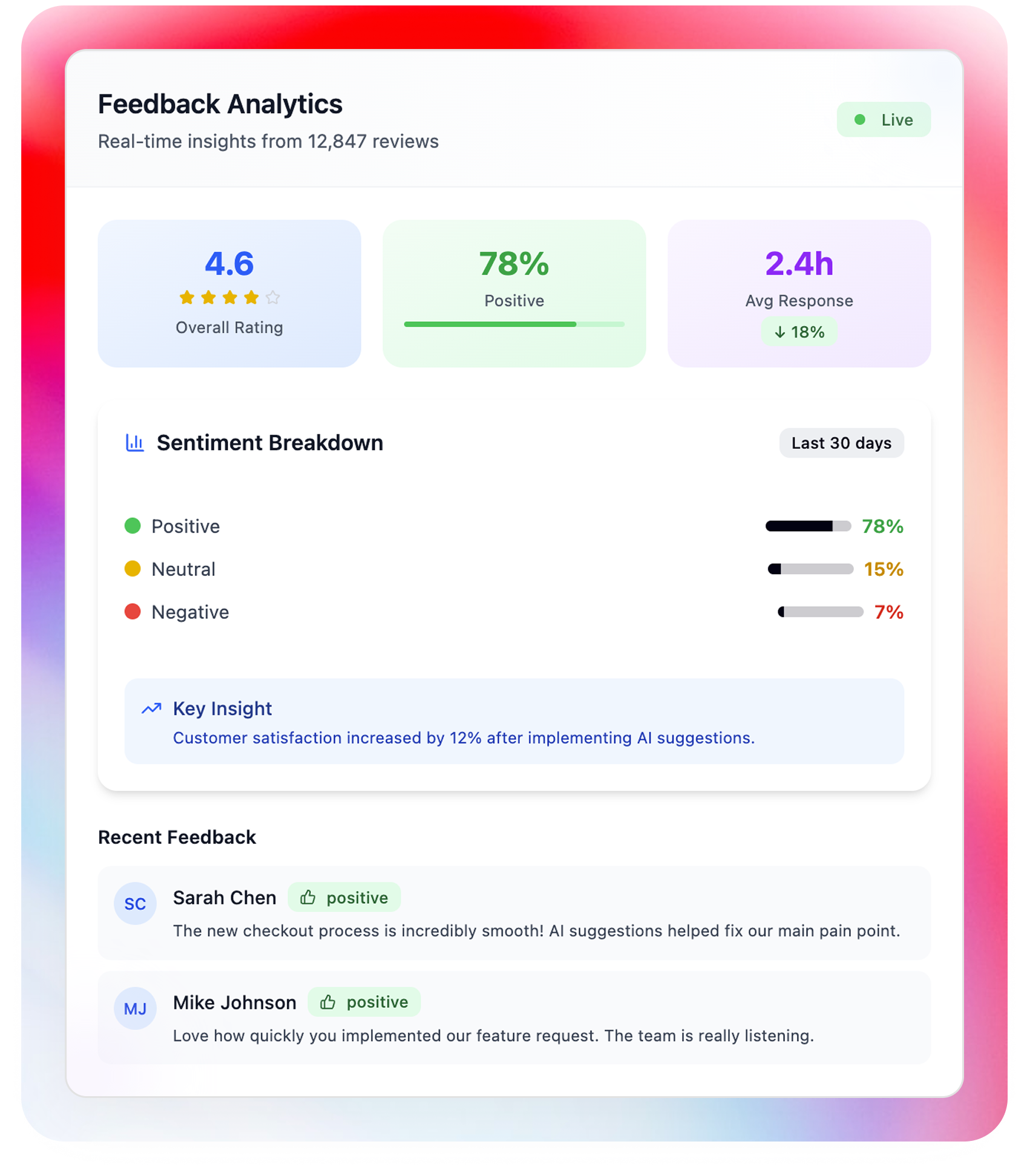
Automated sentiment analysis, semantic clustering, and feedback summaries helped product teams identify recurring issues and customer requests faster.
40,000+ feedback records processed
The platform brought historical feedback from multiple channels into one searchable environment, helping teams analyze large volumes of customer input.
Automated reporting and issue tracking
Weekly Slack digests, monthly product reports, and Jira draft-ticket creation helped teams move from feedback analysis toward follow-up actions.
About the project
Our client was a US-based B2B SaaS company. The client’s product and CX teams struggled to keep up with user feedback across multiple channels, including G2 reviews and in-app feedback. They were missing clear signals in the noise, so they partnered with us to build an LLM-based solution for gathering feedback insights.
The client had
An existing SaaS product
Feedback across multiple channels
40,000+ historical records
We were responsible for
Feedback ingestion and AI analysis
Clustering and insights dashboard
Monitoring and automated reporting
Team
Project manager
Software architect (part-time)
AI/ML engineer
Backend engineer
Frontend engineer
DevOps engineer
QA engineer (part-time)
Key features delivered
The final solution consists of several key features.
Feedback ingestion layer
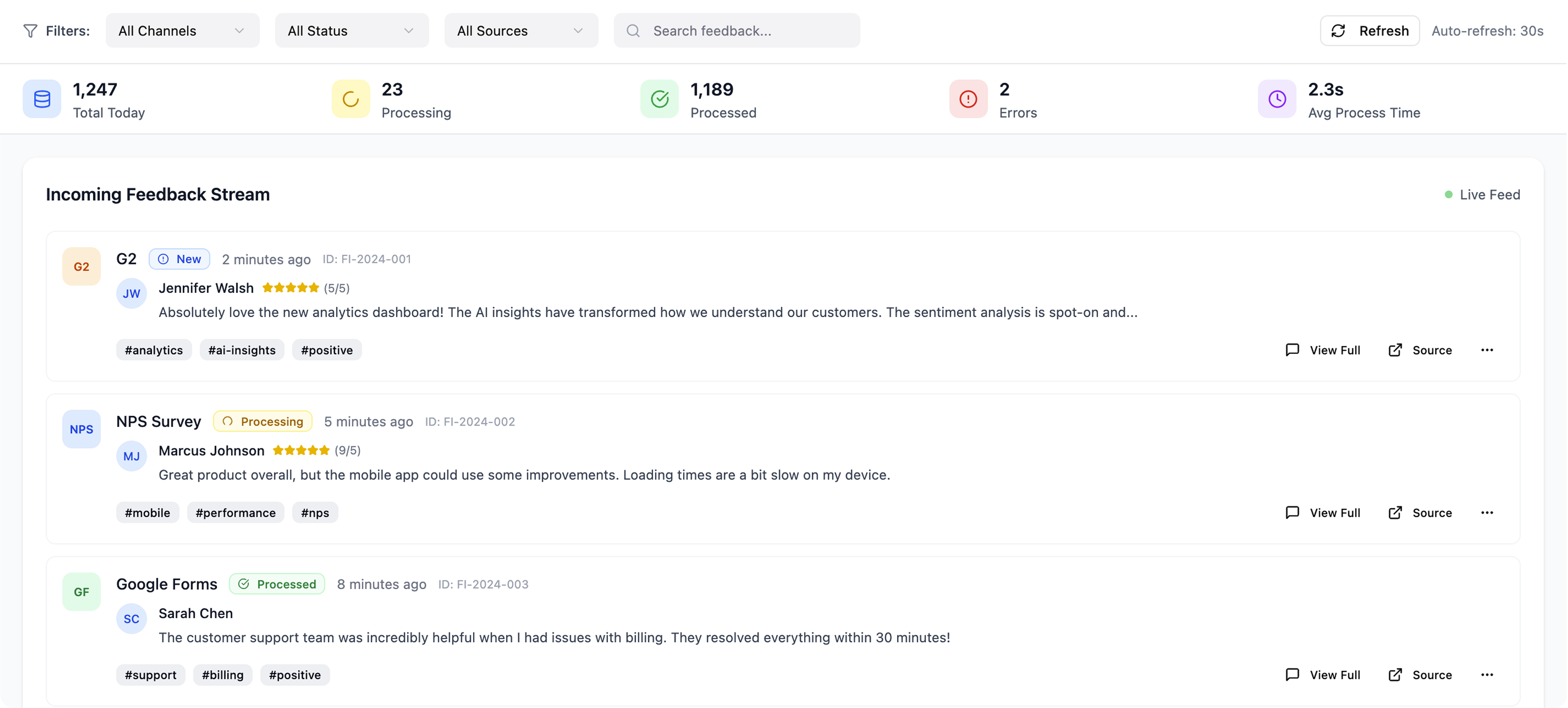
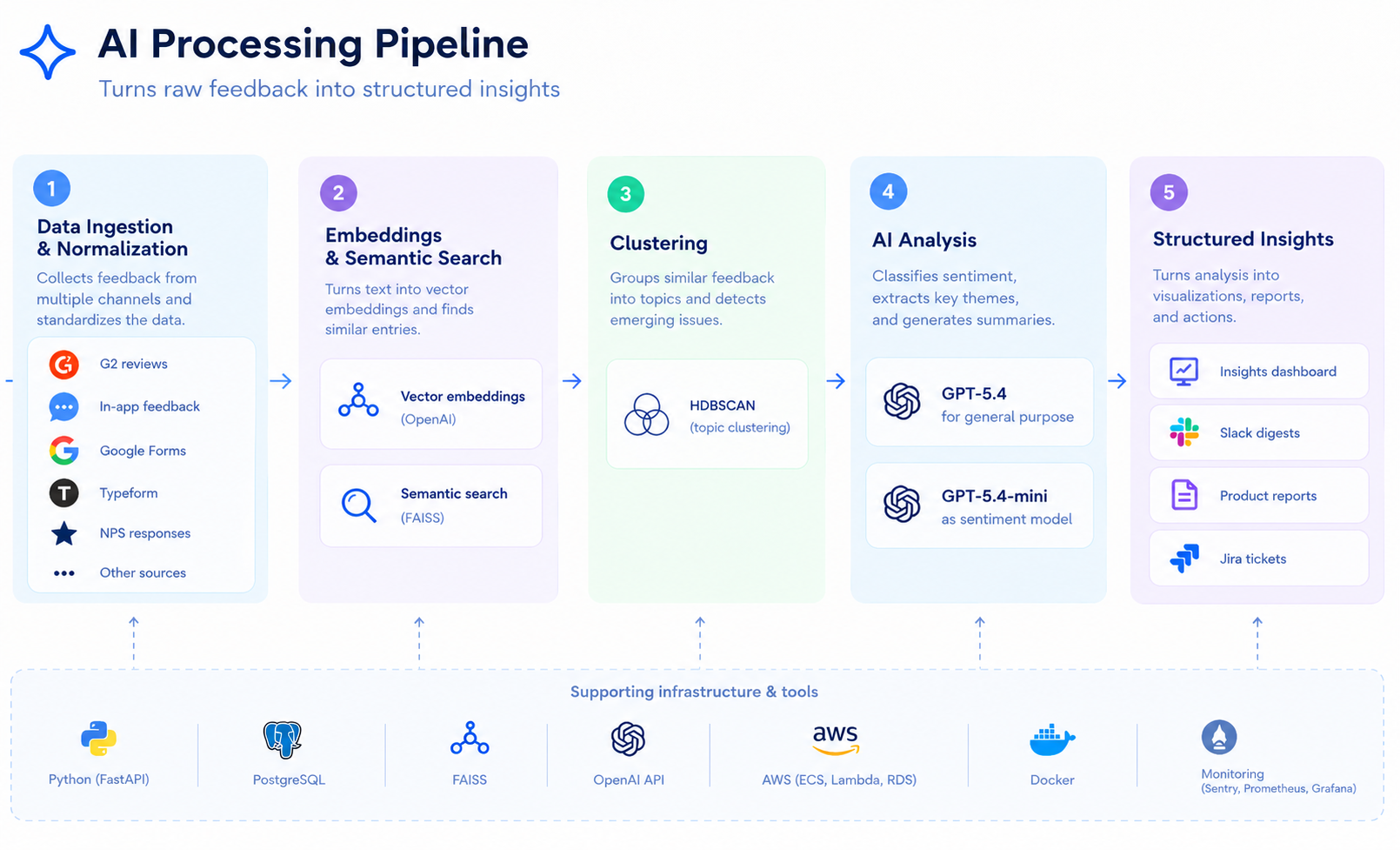
Unifies feedback ingestion from 5+ sources like G2 reviews, in-app feedback forms, Google Forms, Typeform, NPS responses and other sources.

AI sentiment analysis engine
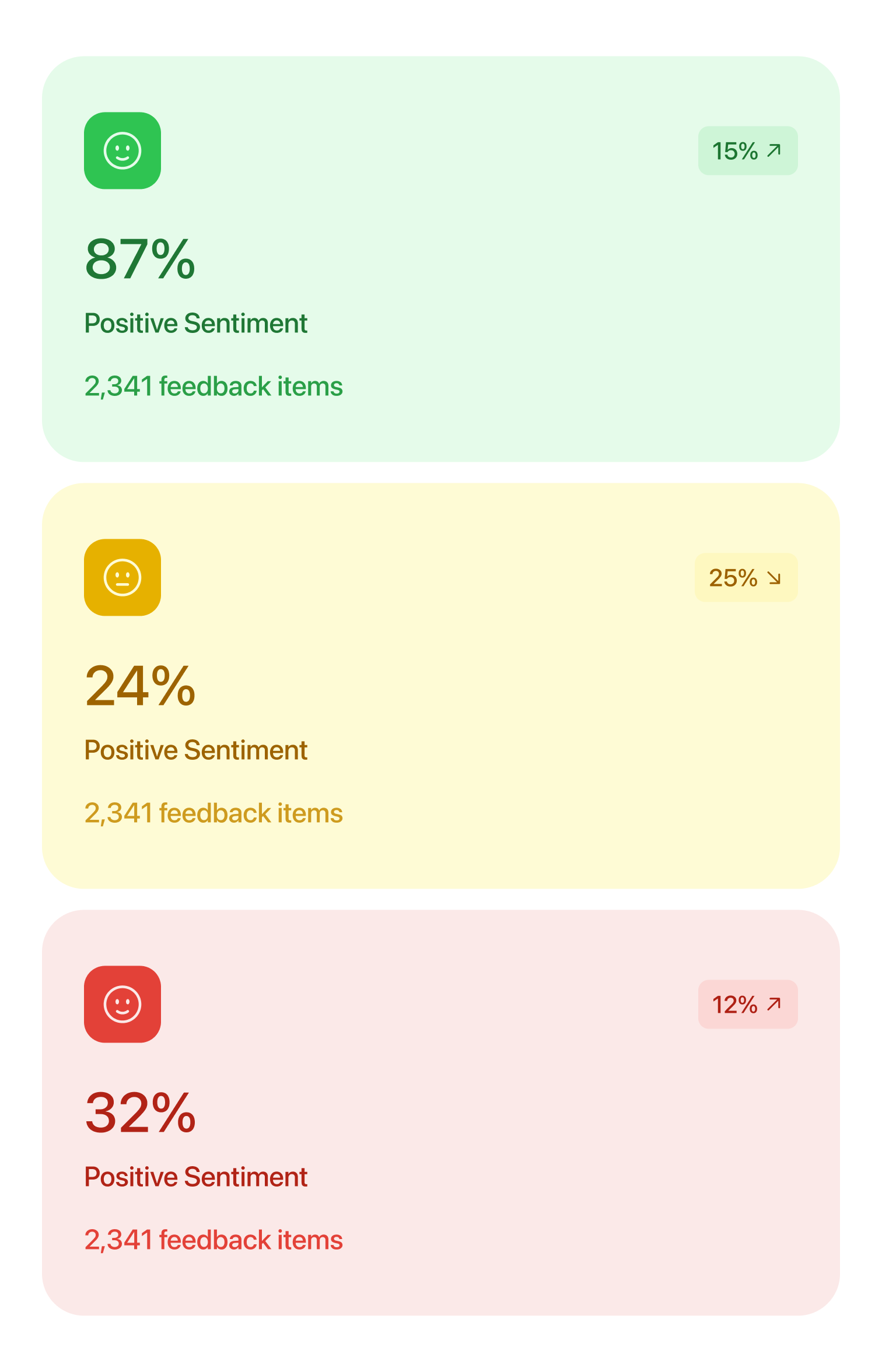
Processes each piece of feedback with the help of an LLM and sentiment model to classify and tag tone and emotional intensity.

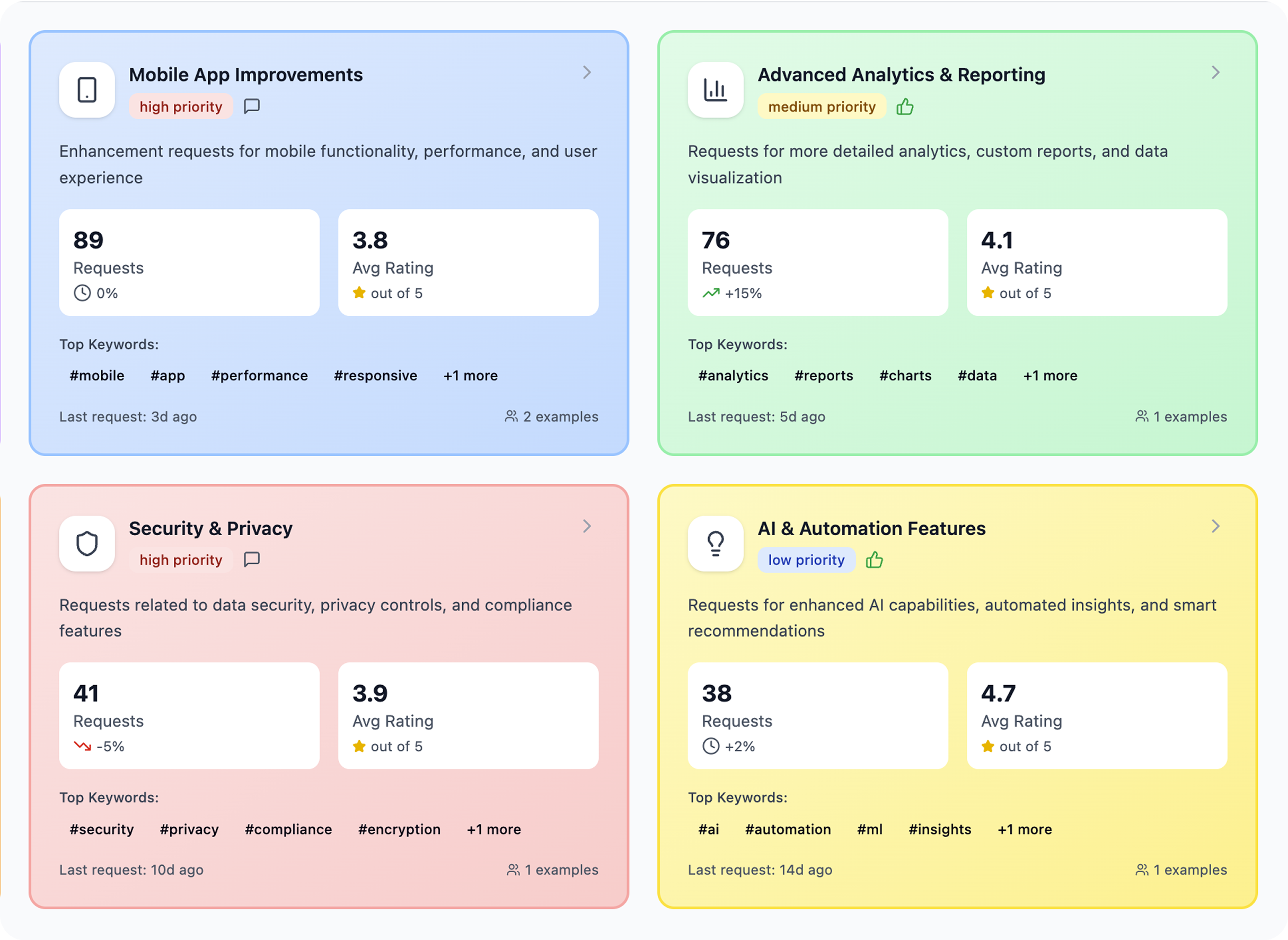
Feature request clustering
Groups similar feedback based on topic and intent to help the team identify common pain points or requests.

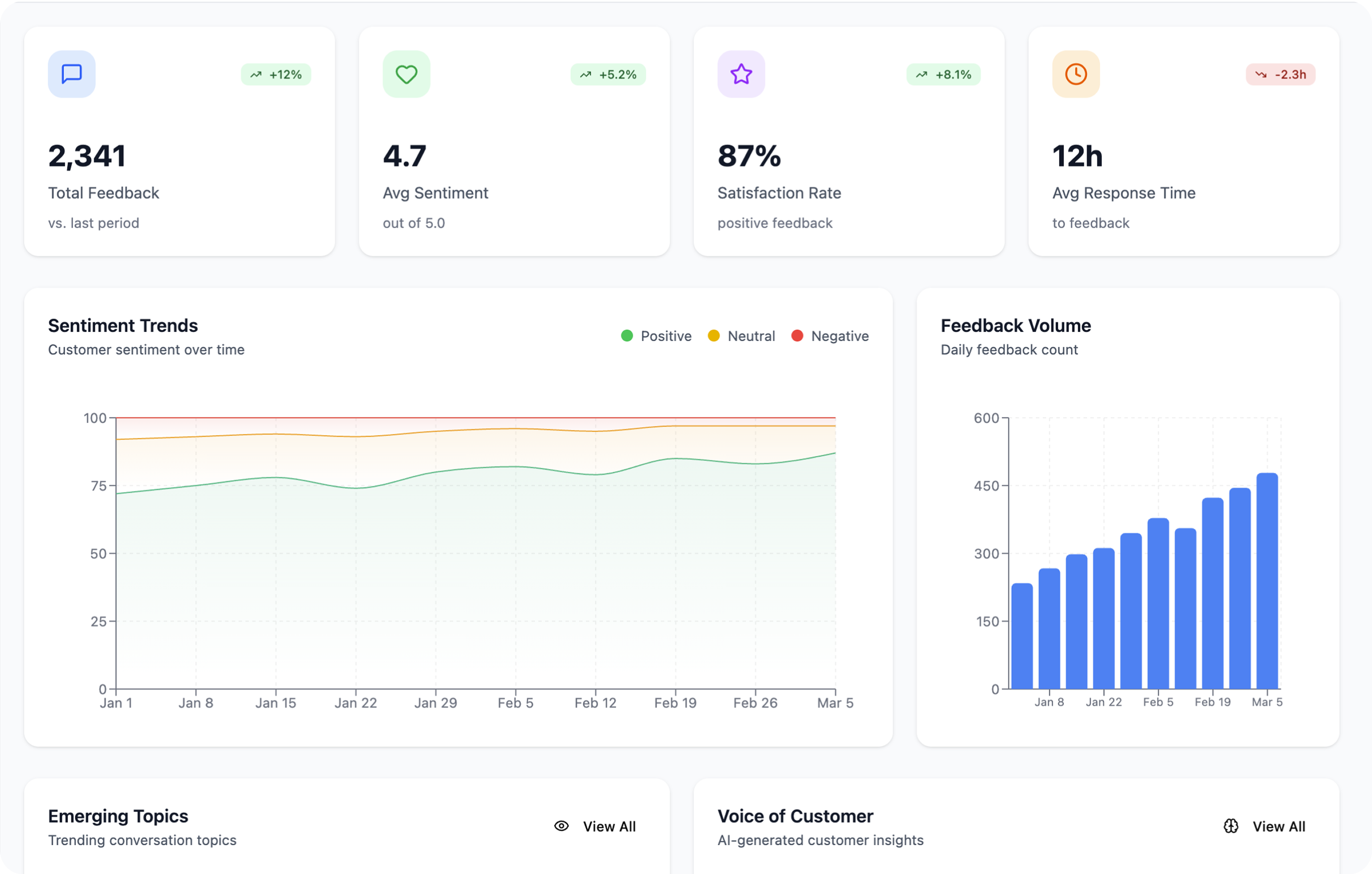
Insights dashboard
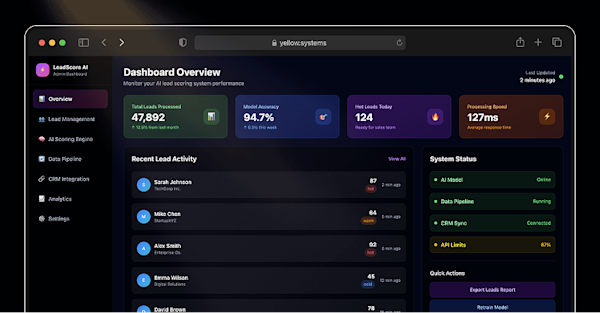
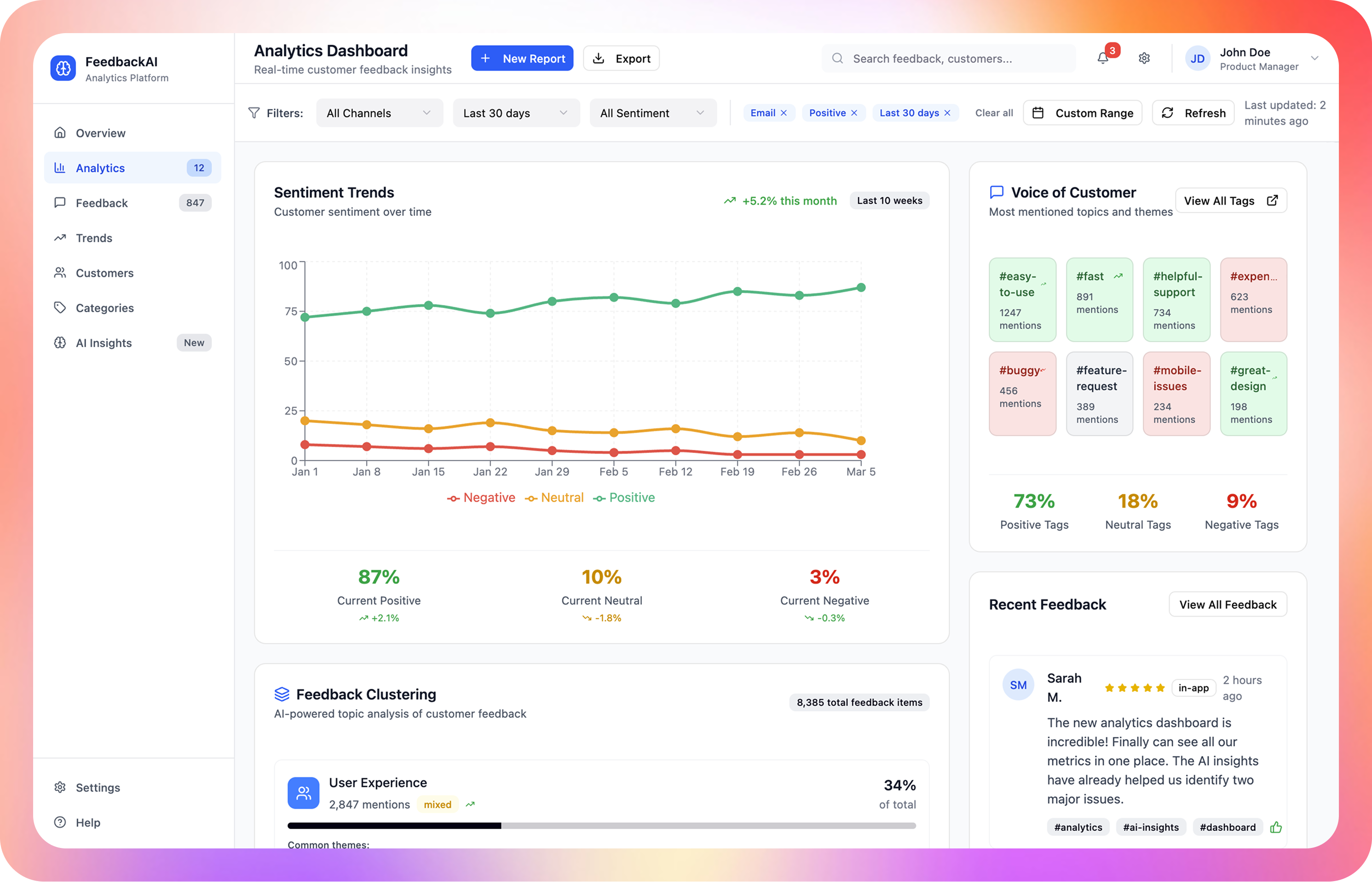
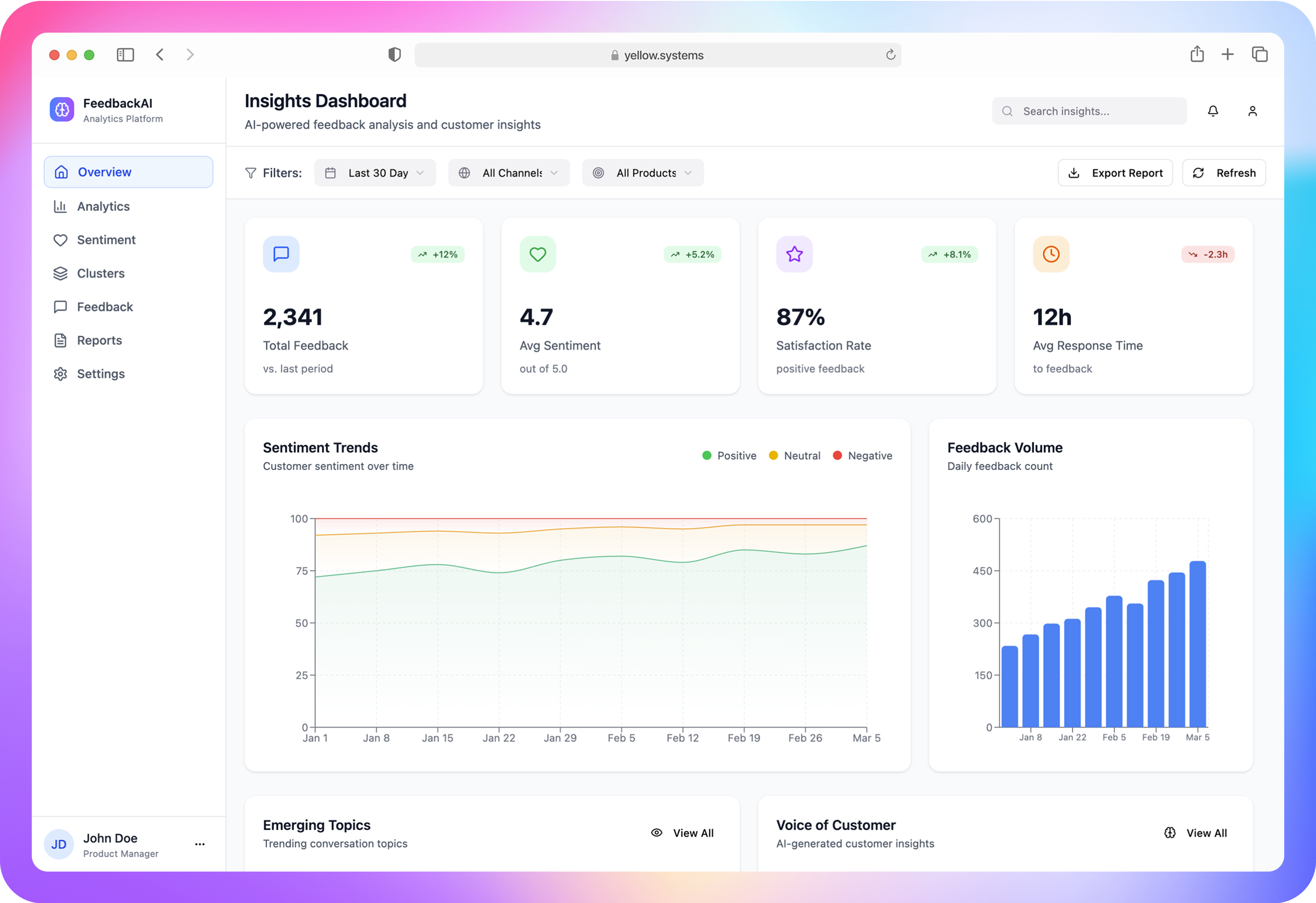
Internal tool for analyzing feedback tone and following user satisfaction metrics over time, with sentiment timeline and "Voice of Customer" summary cards.

More features
Weekly Slack digest
Summaries of key feedback trends delivered via Slack.
Monthly product reports
Recurring topics and trends to support product planning.
Jira draft tickets
Draft tickets generated for frequently requested features.
Feedback trend analysis
Tracks changes in sentiment and topic frequency over time.
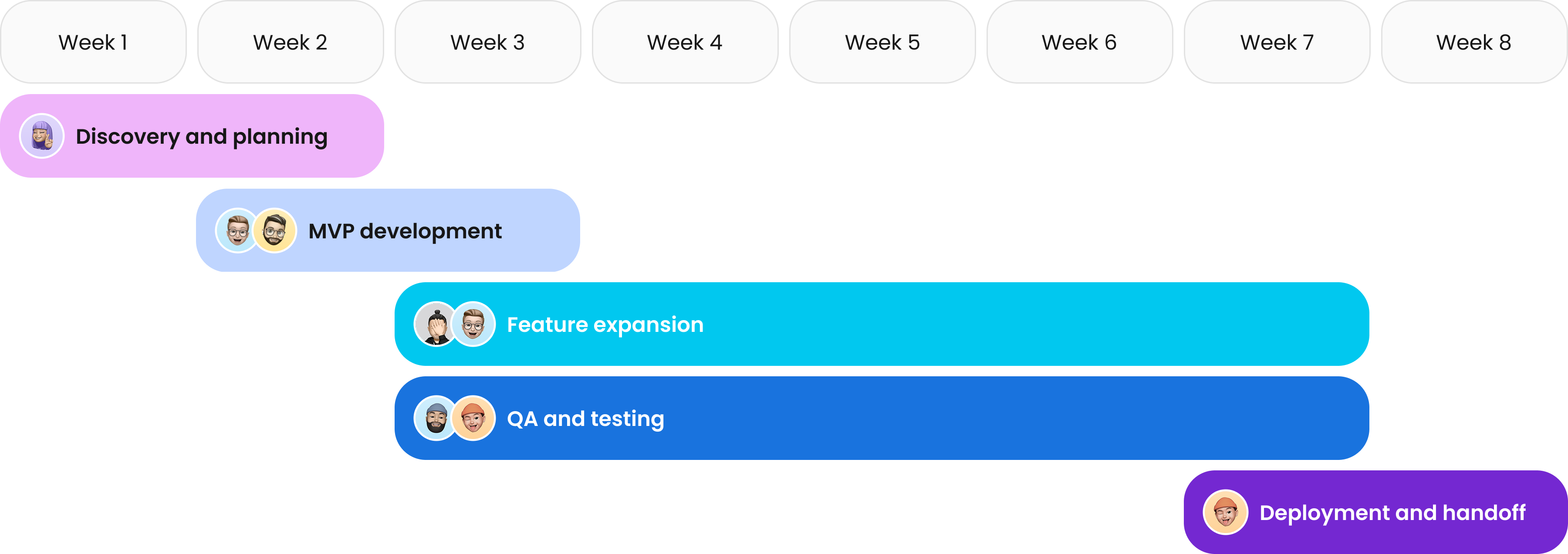
Project timeline
Tech stack
The technologies we used to realise the LLM integration smoothly.

Development challenges and solutions
What challenges our team faced and how we overcame them.
Feedback duplication across channels
Challenge: Users sometimes say the same thing across different channels. Duplicates inflated cluster weights and caused noise in insights.
Solution: We embedded each feedback entry as a vector and used semantic deduplication (cosine similarity + timestamp thresholds) and applied near-duplicate suppression logic in clustering to avoid double-counting.
Dynamic feedback topics
Challenge: New issues and requests emerge over time (for example, when a new feature suddenly gets lots of complaints), making static topic taxonomies brittle.
Solution: Our team used unsupervised clustering (HDBSCAN + embeddings) so new topics would emerge naturally. We also enabled human curation: Product managers could rename clusters and map them to the internal product taxonomy.
Overwhelming the client with data
Challenge: In the first version, the system produced too much information. Stakeholders struggled to separate signal from noise.
Solution: We revised the app’s UX and prioritized simplicity by introducing clear charts, summaries, and filters.
Scaling to handle large volumes
Challenge: The client's analytics team forecast potentially thousands of feedback records per day. Our system had to be ready to handle this volume of feedback.
Solution: We chose a FAISS (Facebook AI Similarity Search) for scalable vector search and used AWS Lambda and S3 for parallel processing of incoming data.
Result
Yellow delivered a customer feedback insights platform that helps the client's teams turn dispersed customer comments into structured product intelligence. The eight-week project gave the client a unified way to monitor customer sentiment, discover emerging feedback themes, and share findings across teams. The project delivered:
42% faster identification of actionable feedback
A centralized dashboard adopted as a key product decision-making tool
Improved cross-team collaboration (Product, CX)

FAQ
Why did the SaaS company need a customer feedback insights engine?
What feedback sources did Yellow bring together?
How did the platform identify recurring customer requests?
How did Yellow prevent duplicate feedback from skewing results?
Can customer feedback insights be shared automatically?
How did the engine help teams act on customer insights?
monthly cost.